
Research & Policy
Behavioral Health Data & Insights
Turning complex behavioral health data into clear, actionable knowledge.
The Research & Policy Division serves as BHTPI's applied research, evaluation, and systems improvement arm, helping organizations use data, research, and policy analysis to strengthen behavioral health services, improve outcomes, and inform decision-making.
Explore county-level behavioral health needs, service access, workforce capacity, unmet need, housing instability, and outcomes across California’s 58 counties.
California Behavioral Health Data Navigator

Turning Data into Action
The BHTPI Research & Policy Division supports organizations seeking to better understand their impact, evaluate programs, strengthen services, inform policy decisions, and improve organizational performance.
Our team combines expertise in behavioral health, program evaluation, organizational leadership, workforce development, and applied research to help organizations move from information to implementation.
Areas of Focus
✓ Program Evaluation
✓ Applied Research
✓ Policy Analysis
✓ Strategic Planning
✓ Workforce Assessment
✓ Community Needs Assessments
✓ Outcome Measurement
✓ Quality Improvement
✓ Data Analytics
✓ Grant Evaluation Support

Core Services
-
Measure Impact. Improve Outcomes.
BHTPI helps organizations evaluate programs, demonstrate effectiveness, meet grant requirements, and identify opportunities for improvement.
Services Include
Logic Model Development
Evaluation Planning
Outcome Measurement Design
Survey Development
Data Collection Systems
Analysis and Reporting
Evaluation Reports
Grant Reporting Support
Starting Investment
$5,000+
-
Understanding the Policies Shaping Behavioral Health
BHTPI provides policy analysis and research to help organizations understand emerging regulations, legislation, funding opportunities, and systems changes.
Services Include
Policy Briefs
Regulatory Analysis
Legislative Monitoring
Environmental Scans
Systems Mapping
Strategic Policy Recommendations
Starting Investment
$1,500+
-
Understanding Workforce Challenges and Opportunities
We help organizations identify workforce strengths, barriers, and opportunities to improve recruitment, retention, supervision, and leadership development.
Services Include
Workforce Assessments
Staff Surveys
Retention Analysis
Leadership Assessments
Organizational Climate Assessments
Workforce Development Planning
Starting Investment
$3,500+
-
Understanding Community Needs and Service Gaps
BHTPI conducts assessments that help organizations understand populations served, identify gaps in care, and develop responsive programs.
Services Include
Stakeholder Interviews
Focus Groups
Data Analysis
Community Surveys
Service Mapping
Needs Assessment Reports
Starting Investment
$7,500+
-
Turning Research into Actionable Insights
BHTPI develops publications designed to inform leaders, policymakers, providers, and community stakeholders.
Deliverables Include
White Papers
Research Reports
Policy Briefs
Issue Briefs
Literature Reviews
Executive Summaries
Starting Investment
$350–$10,000+

BHTPI Research & Policy Signature Services
Behavioral Health Workforce Assessment
Comprehensive workforce analysis examining recruitment, retention, supervision, burnout, engagement, and workforce development opportunities.
Organizational Health Assessment
Assessment of organizational culture, leadership, communication, employee engagement, and readiness for growth.
California Behavioral Health Policy Impact Analysis
Review of state and federal policy changes and their implications for providers and organizations.
Behavioral Health Program Evaluation Package
End-to-end evaluation services for behavioral health and community-based programs.
Why This Work Matters
California’s behavioral health environment is rapidly evolving. Organizations are expected to respond to changing regulations, shifting funding structures, growing workforce demands, and increasing community need—all while maintaining quality care and operational stability.
Research and policy support are essential for helping leaders understand what is changing, what it means, and how to respond effectively. BHTPI exists to bridge that gap through clear analysis, practical resources, and implementation-centered support.

Featured Publications
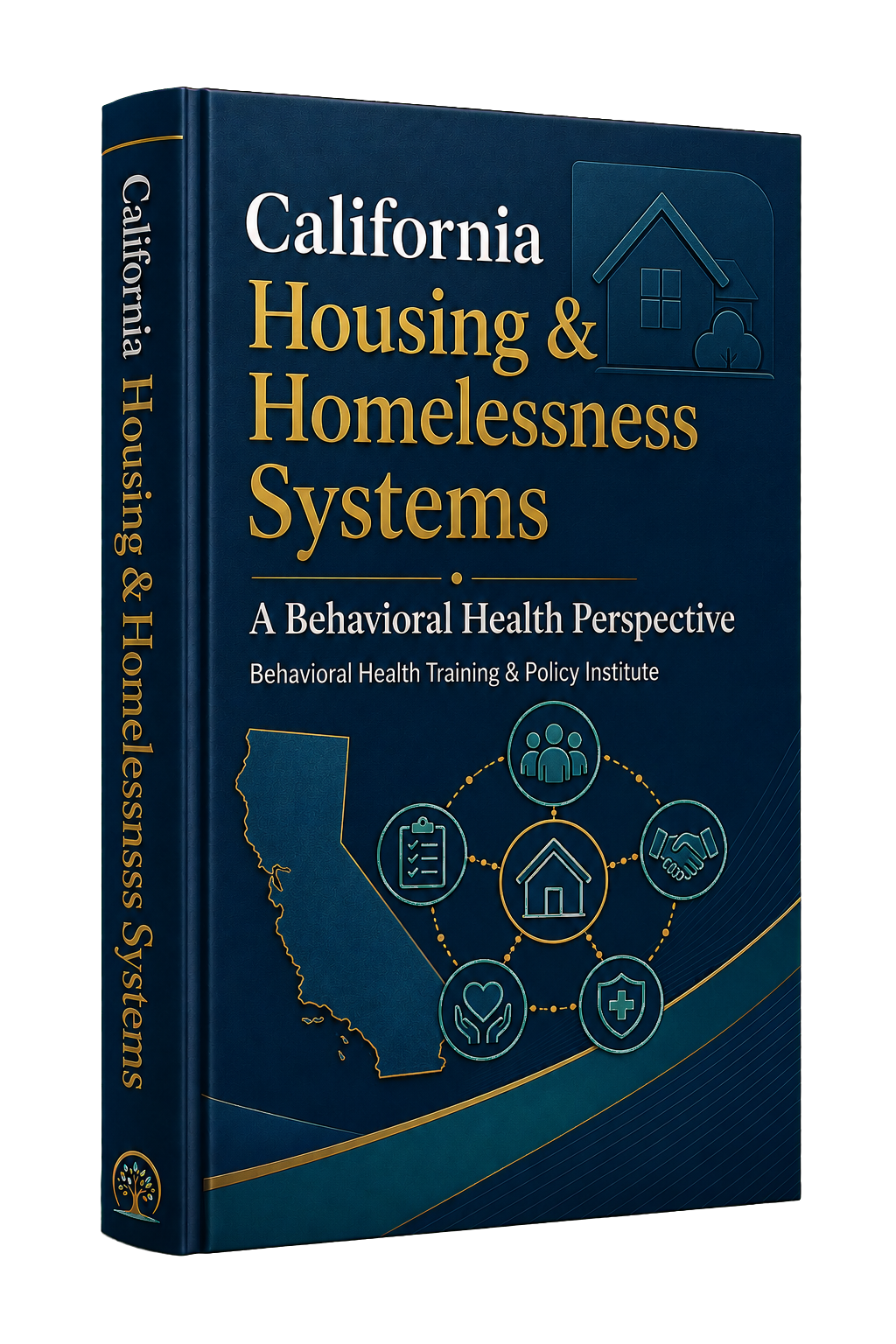
Comprehensive White Paper & Implementation Guide
California's housing and homelessness crisis continues to place unprecedented demands on behavioral health systems, community-based organizations, healthcare providers, and public agencies. As state and local leaders work to address homelessness through Housing First initiatives, supportive housing models, CalAIM, Behavioral Health Services Act (BHSA) investments, and cross-system collaboration, organizations must understand how housing and behavioral health intersect to create lasting outcomes.
This comprehensive white paper provides an in-depth examination of California's housing and homelessness landscape through a behavioral health lens. Designed for behavioral health professionals, healthcare leaders, policymakers, county agencies, nonprofit organizations, housing providers, and students, this resource explores the policies, programs, evidence-based practices, and system strategies shaping California's response to homelessness.
Topics Include:
California's Housing and Homelessness Landscape
Housing First Principles and Implementation
Behavioral Health and Homelessness Intersections
Permanent Supportive Housing Models
CalAIM, Enhanced Care Management (ECM), and Community Supports
Substance Use Disorders and Homelessness
Trauma-Informed Approaches to Service Delivery
Outreach and Engagement Strategies
Cross-System Collaboration and Care Coordination
Behavioral Health Services Act (BHSA) Housing Investments
Workforce Considerations and Organizational Capacity Building
Emerging Trends and Policy Considerations
Who Should Download This Resource?
Behavioral Health Providers
County Behavioral Health Departments
Community-Based Organizations
Housing and Homeless Services Providers
Healthcare Organizations
Social Service Agencies
Program Administrators and Supervisors
Behavioral Health Students and Emerging Leaders
Policymakers and Researchers
What You'll Gain
A deeper understanding of California's housing and homelessness systems
Practical strategies for program development and service integration
Insight into current state policy initiatives and funding opportunities
Tools for improving organizational readiness and cross-sector collaboration
Evidence-informed approaches to supporting individuals experiencing homelessness
Whether you are developing new programs, expanding services, training staff, or seeking to better understand California's evolving housing and behavioral health systems, this white paper serves as an essential resource for informed decision-making and effective practice.
Digital Download | PDF Format
Published by the Behavioral Health Training & Policy Institute (BHTPI)
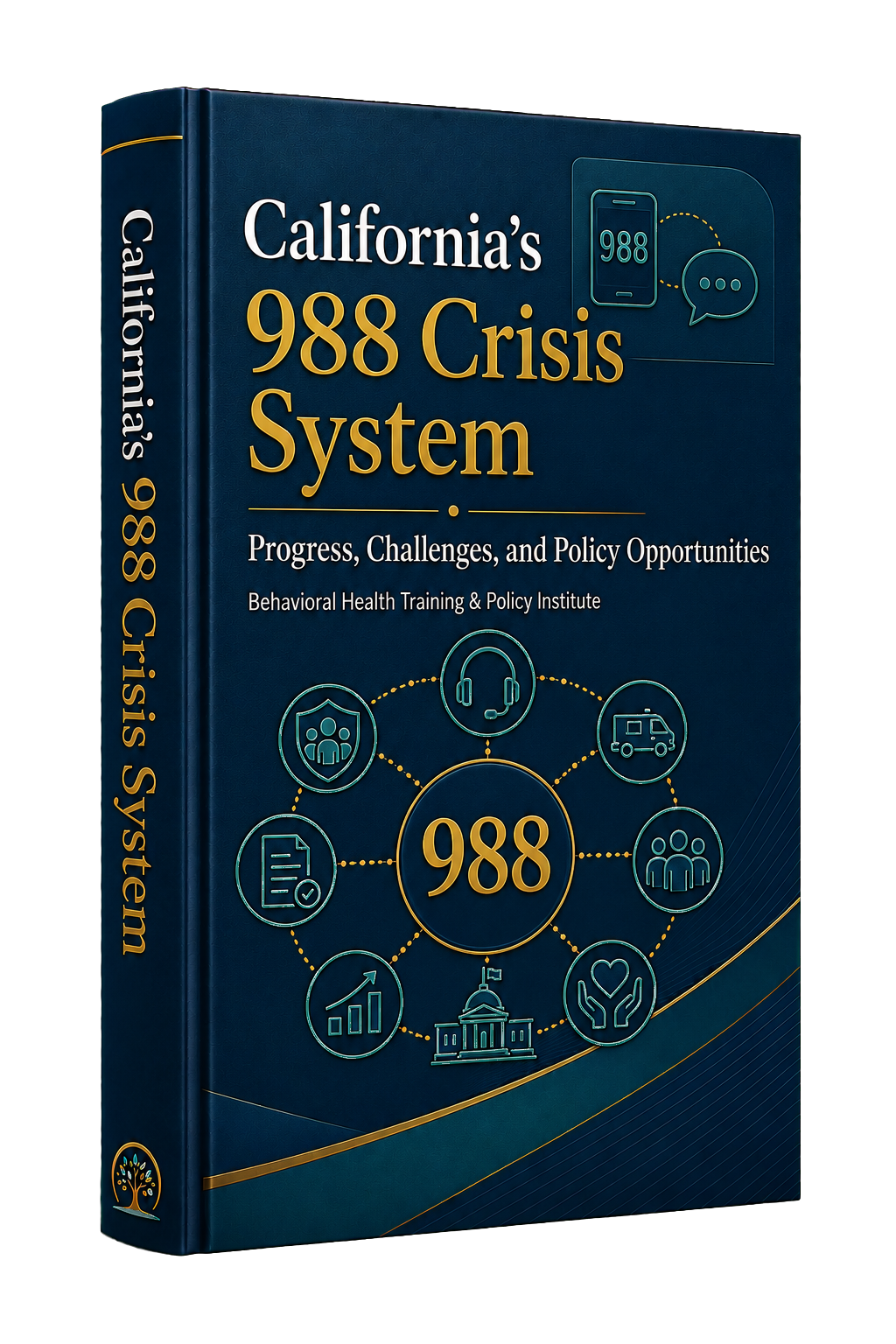
Research White Paper | Digital Download
California has made significant investments in transforming its behavioral health crisis response system through the implementation of 988. Yet despite promising outcomes and growing national momentum, substantial challenges remain in workforce capacity, public awareness, system interoperability, and equitable access to care.
This comprehensive research white paper examines the current state of California's 988 Crisis System and explores the opportunities and barriers shaping its future. Drawing upon peer-reviewed research, government reports, and statewide data published through 2026, the report provides behavioral health leaders, policymakers, community-based organizations, and healthcare professionals with a practical analysis of where California stands—and what must happen next.
Readers will gain insight into the national evolution of crisis response, California's implementation of AB 988 (The Miles Hall Lifeline and Suicide Prevention Act), emerging workforce challenges, disparities in awareness and access, and evidence-informed policy solutions designed to strengthen the state's behavioral health infrastructure.
Inside This Report
Executive Summary
A concise overview of key findings, major challenges, and actionable recommendations supported by current data.
Background & National Context
Examines the transition from 1-800-273-TALK to 988, federal investments in crisis response infrastructure, and emerging national outcomes—including research demonstrating reductions in youth suicide mortality following implementation.
California's 988 Landscape
Analyzes AB 988 implementation, statewide progress, governance structures, funding mechanisms, and persistent challenges related to interoperability and service delivery.
The Workforce Crisis
Explores the behavioral health workforce shortages affecting crisis response systems nationwide, including recruitment, retention, supervision, and sustainable funding concerns.
Equity, Access, and the Awareness Gap
Reviews disparities in public awareness, language accessibility, rural service coverage, and youth engagement while highlighting opportunities to improve equitable access to crisis services.
Six Policy Recommendations
Provides a practical roadmap for state leaders, counties, healthcare organizations, and community-based providers focused on governance, funding, workforce development, interoperability, awareness, and health equity.
The Role of Community-Based Organizations
Highlights how community-based organizations serve as critical partners in crisis response, prevention, outreach, and system transformation efforts throughout California.
Ideal For
County Behavioral Health Departments
Community-Based Organizations
Crisis Service Providers
Healthcare Systems
Behavioral Health Leaders
Policymakers and Advocates
Researchers and Students
Workforce Development Professionals
Training and Technical Assistance Providers
What You'll Gain
✔ Current California 988 implementation insights
✔ National and state research findings through 2026
✔ Analysis of behavioral health workforce challenges
✔ Policy recommendations for system improvement
✔ Strategies to advance equity and community engagement
✔ Actionable information for organizational planning and advocacy
Format: Digital PDF Download
Publisher: Behavioral Health Training & Policy Institute (BHTPI) Research & Policy Division
A timely resource for organizations and leaders committed to strengthening California's behavioral health crisis response system and improving access to lifesaving care.
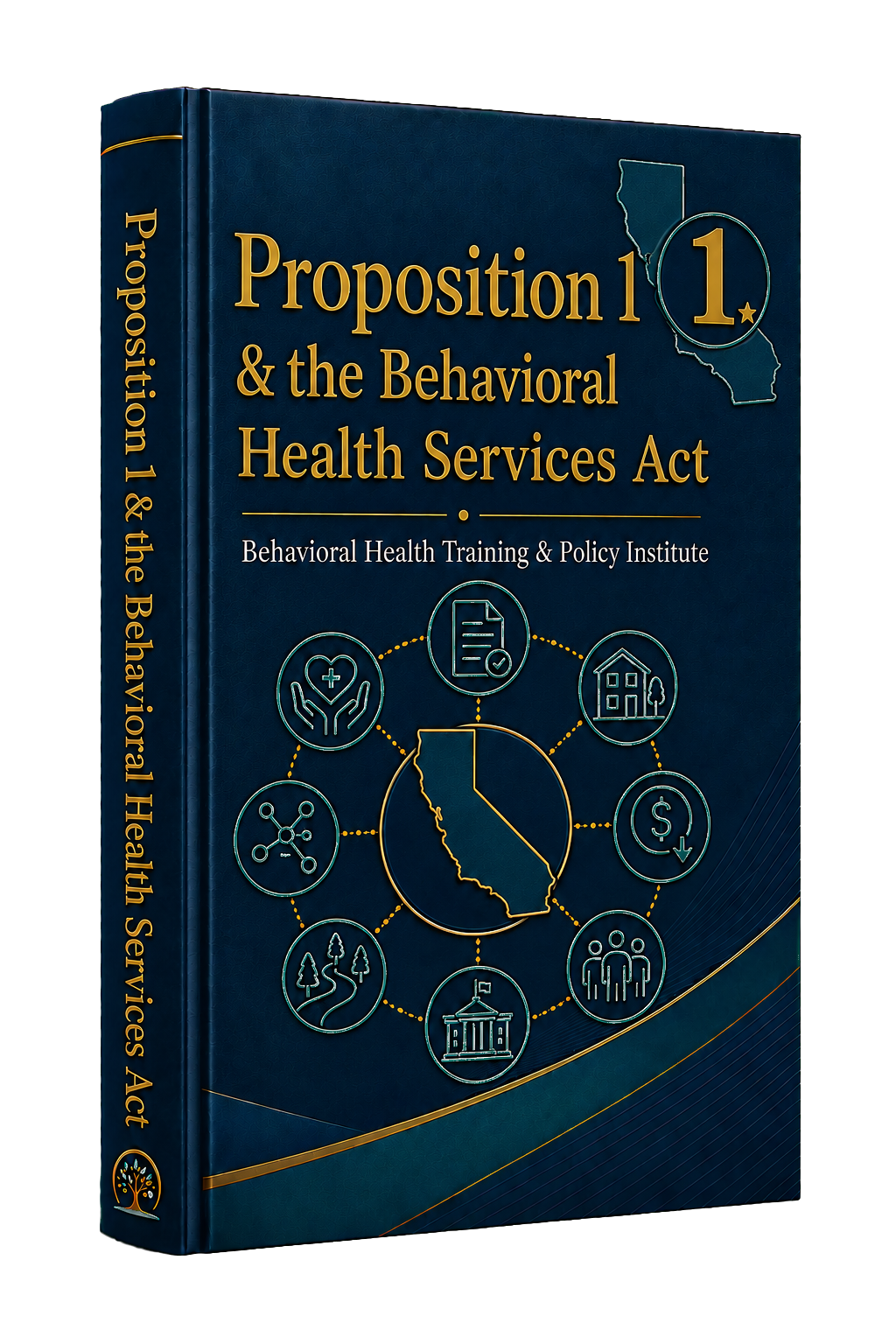
An Implementation Guide for Counties, Providers, and Community Partners
BHTPI Research & Policy Division | June 2026
California's behavioral health system is undergoing its most significant transformation in decades.
With the passage of Proposition 1 and the implementation of the Behavioral Health Services Act (BHSA), counties, providers, community-based organizations, and housing partners must navigate a new funding structure, expanded service priorities, increased accountability requirements, and unprecedented opportunities for system redesign.
Proposition 1 & the Behavioral Health Services Act: An Implementation Guide for Counties, Providers, and Community Partners provides a practical, policy-focused roadmap for understanding and implementing California's new behavioral health framework. Designed for behavioral health leaders, county administrators, policymakers, housing partners, and community organizations, this comprehensive white paper translates complex legislation into actionable guidance for planning, compliance, and strategic decision-making.
Drawing from state guidance, legislative analyses, budget documents, and implementation resources available through June 2026, this report examines the operational, financial, and strategic implications of BHSA while identifying opportunities for organizations to strengthen services and prepare for long-term success.
Inside This Report
From MHSA to BHSA
Explore the policy transformation behind Proposition 1 and the four major structural changes reshaping California's behavioral health system, including expanded substance use disorder funding, revised spending requirements, elimination of Prevention and Early Intervention as a standalone funding category, and enhanced accountability measures.
The New Funding Architecture
Gain a detailed understanding of the county allocation model effective July 1, 2026, including required investments in housing interventions, Full Service Partnerships, outreach and engagement services, workforce development, and administrative functions. Includes implementation guidance and analysis of the BHSA flexibility provisions.
The $6.38 Billion Bond Investment
Examine California's historic behavioral health infrastructure investment, including Behavioral Health Continuum Infrastructure Program (BHCIP) funding rounds, Homekey+ housing initiatives, tribal set-asides, matching fund requirements, and implementation challenges identified by statewide policy analysts.
The County Integrated Plan
Learn what counties are required to submit under BHSA, including funding alignment strategies, Community Program Planning (CPP) requirements, Managed Care Plan collaboration expectations, performance measures, and implementation timelines.
Implementation Challenges
Analyze the most pressing barriers affecting counties and providers, including housing development capacity, workforce shortages, operating sustainability concerns, prevention funding transitions, contract uncertainty, and emerging federal fiscal risks.
Strategic Opportunities
Discover practical recommendations tailored to:
County Behavioral Health Departments
Community-Based Organizations
Behavioral Health Providers
Housing Developers
Homeless Services Organizations
Healthcare and Managed Care Partners
How BHTPI Can Help
Explore how the Behavioral Health Training & Policy Institute supports organizations through policy analysis, strategic planning, Integrated Plan development, community needs assessments, workforce training, program evaluation, and implementation support.
Ideal For
County Behavioral Health Directors and Leadership Teams
Behavioral Health Administrators
Community-Based Organizations
Housing and Homelessness Service Providers
Healthcare Organizations and Managed Care Plans
Behavioral Health Consultants
Policymakers and Advocates
Researchers and Graduate Students
What You'll Gain
✔ Clear explanation of Proposition 1 and BHSA requirements
✔ Analysis of California's new behavioral health funding structure
✔ Guidance on county Integrated Plan development and implementation
✔ Insights into housing, workforce, and infrastructure investments
✔ Identification of emerging implementation risks and challenges
✔ Strategic recommendations for organizations navigating system change
✔ Actionable tools for planning, partnership development, and organizational readiness
Format: Digital PDF Download
Publisher: Behavioral Health Training & Policy Institute (BHTPI) Research & Policy Division
As California enters a new era of behavioral health policy, organizations that understand the opportunities, requirements, and implementation realities of Proposition 1 and the Behavioral Health Services Act will be best positioned to lead, adapt, and serve their communities effectively.
California Behavioral Health Policy Brief
The BHTPI California Behavioral Health Policy Brief translates complex policy developments into practical guidance for counties, community-based organizations, healthcare providers and behavioral health leaders.

Let’s Work Together