

 Image 1 of 1
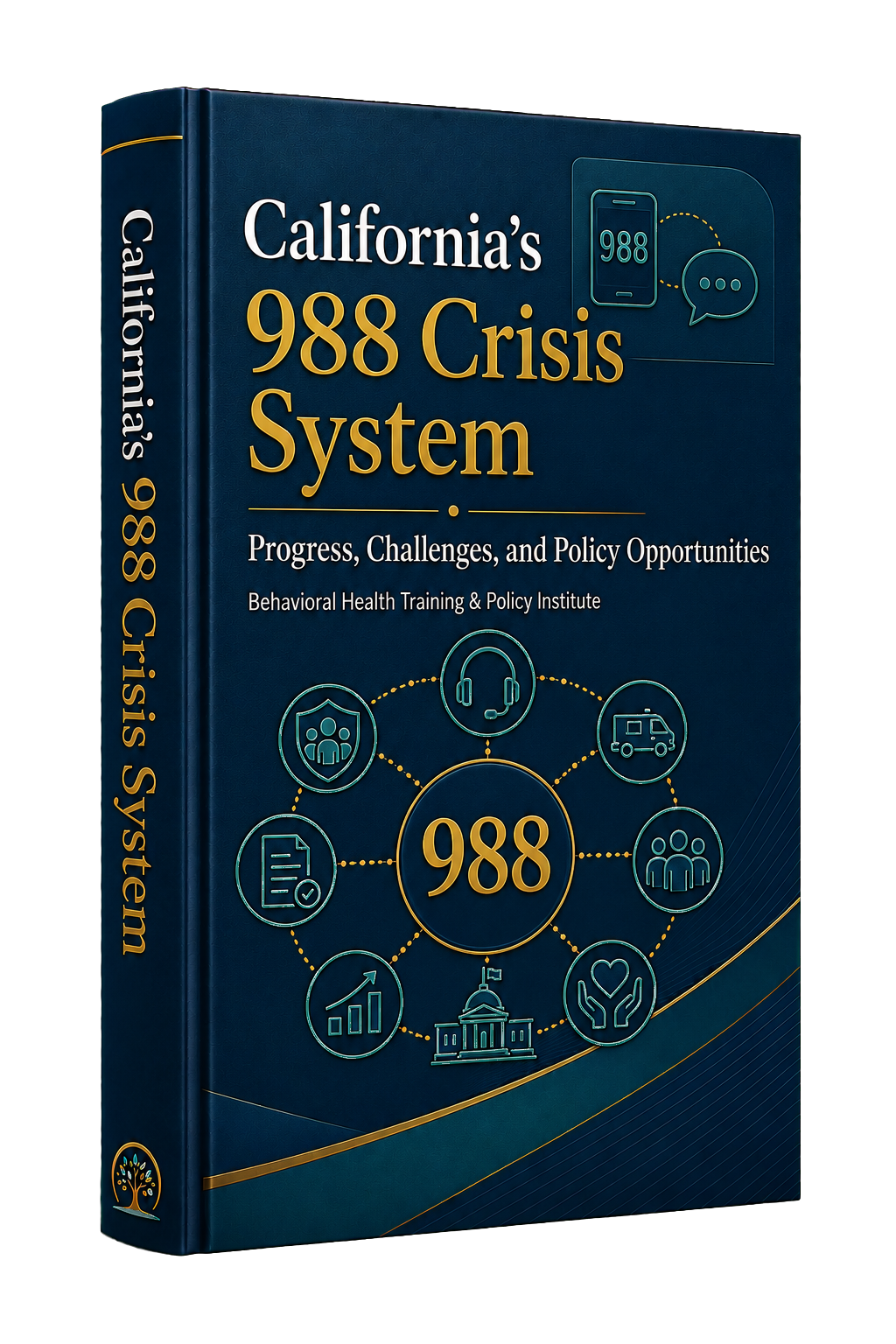
California's 988 Crisis System: Progress, Challenges, and Policy Opportunities
Research White Paper | Digital Download
California has made significant investments in transforming its behavioral health crisis response system through the implementation of 988. Yet despite promising outcomes and growing national momentum, substantial challenges remain in workforce capacity, public awareness, system interoperability, and equitable access to care.
This comprehensive research white paper examines the current state of California's 988 Crisis System and explores the opportunities and barriers shaping its future. Drawing upon peer-reviewed research, government reports, and statewide data published through 2026, the report provides behavioral health leaders, policymakers, community-based organizations, and healthcare professionals with a practical analysis of where California stands—and what must happen next.
Readers will gain insight into the national evolution of crisis response, California's implementation of AB 988 (The Miles Hall Lifeline and Suicide Prevention Act), emerging workforce challenges, disparities in awareness and access, and evidence-informed policy solutions designed to strengthen the state's behavioral health infrastructure.
Inside This Report
Executive Summary
A concise overview of key findings, major challenges, and actionable recommendations supported by current data.
Background & National Context
Examines the transition from 1-800-273-TALK to 988, federal investments in crisis response infrastructure, and emerging national outcomes—including research demonstrating reductions in youth suicide mortality following implementation.
California's 988 Landscape
Analyzes AB 988 implementation, statewide progress, governance structures, funding mechanisms, and persistent challenges related to interoperability and service delivery.
The Workforce Crisis
Explores the behavioral health workforce shortages affecting crisis response systems nationwide, including recruitment, retention, supervision, and sustainable funding concerns.
Equity, Access, and the Awareness Gap
Reviews disparities in public awareness, language accessibility, rural service coverage, and youth engagement while highlighting opportunities to improve equitable access to crisis services.
Six Policy Recommendations
Provides a practical roadmap for state leaders, counties, healthcare organizations, and community-based providers focused on governance, funding, workforce development, interoperability, awareness, and health equity.
The Role of Community-Based Organizations
Highlights how community-based organizations serve as critical partners in crisis response, prevention, outreach, and system transformation efforts throughout California.
Ideal For
County Behavioral Health Departments
Community-Based Organizations
Crisis Service Providers
Healthcare Systems
Behavioral Health Leaders
Policymakers and Advocates
Researchers and Students
Workforce Development Professionals
Training and Technical Assistance Providers
What You'll Gain
✔ Current California 988 implementation insights
✔ National and state research findings through 2026
✔ Analysis of behavioral health workforce challenges
✔ Policy recommendations for system improvement
✔ Strategies to advance equity and community engagement
✔ Actionable information for organizational planning and advocacy
Format: Digital PDF Download
Publisher: Behavioral Health Training & Policy Institute (BHTPI) Research & Policy Division
A timely resource for organizations and leaders committed to strengthening California's behavioral health crisis response system and improving access to lifesaving care.
Research White Paper | Digital Download
California has made significant investments in transforming its behavioral health crisis response system through the implementation of 988. Yet despite promising outcomes and growing national momentum, substantial challenges remain in workforce capacity, public awareness, system interoperability, and equitable access to care.
This comprehensive research white paper examines the current state of California's 988 Crisis System and explores the opportunities and barriers shaping its future. Drawing upon peer-reviewed research, government reports, and statewide data published through 2026, the report provides behavioral health leaders, policymakers, community-based organizations, and healthcare professionals with a practical analysis of where California stands—and what must happen next.
Readers will gain insight into the national evolution of crisis response, California's implementation of AB 988 (The Miles Hall Lifeline and Suicide Prevention Act), emerging workforce challenges, disparities in awareness and access, and evidence-informed policy solutions designed to strengthen the state's behavioral health infrastructure.
Inside This Report
Executive Summary
A concise overview of key findings, major challenges, and actionable recommendations supported by current data.
Background & National Context
Examines the transition from 1-800-273-TALK to 988, federal investments in crisis response infrastructure, and emerging national outcomes—including research demonstrating reductions in youth suicide mortality following implementation.
California's 988 Landscape
Analyzes AB 988 implementation, statewide progress, governance structures, funding mechanisms, and persistent challenges related to interoperability and service delivery.
The Workforce Crisis
Explores the behavioral health workforce shortages affecting crisis response systems nationwide, including recruitment, retention, supervision, and sustainable funding concerns.
Equity, Access, and the Awareness Gap
Reviews disparities in public awareness, language accessibility, rural service coverage, and youth engagement while highlighting opportunities to improve equitable access to crisis services.
Six Policy Recommendations
Provides a practical roadmap for state leaders, counties, healthcare organizations, and community-based providers focused on governance, funding, workforce development, interoperability, awareness, and health equity.
The Role of Community-Based Organizations
Highlights how community-based organizations serve as critical partners in crisis response, prevention, outreach, and system transformation efforts throughout California.
Ideal For
County Behavioral Health Departments
Community-Based Organizations
Crisis Service Providers
Healthcare Systems
Behavioral Health Leaders
Policymakers and Advocates
Researchers and Students
Workforce Development Professionals
Training and Technical Assistance Providers
What You'll Gain
✔ Current California 988 implementation insights
✔ National and state research findings through 2026
✔ Analysis of behavioral health workforce challenges
✔ Policy recommendations for system improvement
✔ Strategies to advance equity and community engagement
✔ Actionable information for organizational planning and advocacy
Format: Digital PDF Download
Publisher: Behavioral Health Training & Policy Institute (BHTPI) Research & Policy Division
A timely resource for organizations and leaders committed to strengthening California's behavioral health crisis response system and improving access to lifesaving care.